Fellsfjara · southeast Iceland
Diamond Beach: find the ice, leave room for the sea
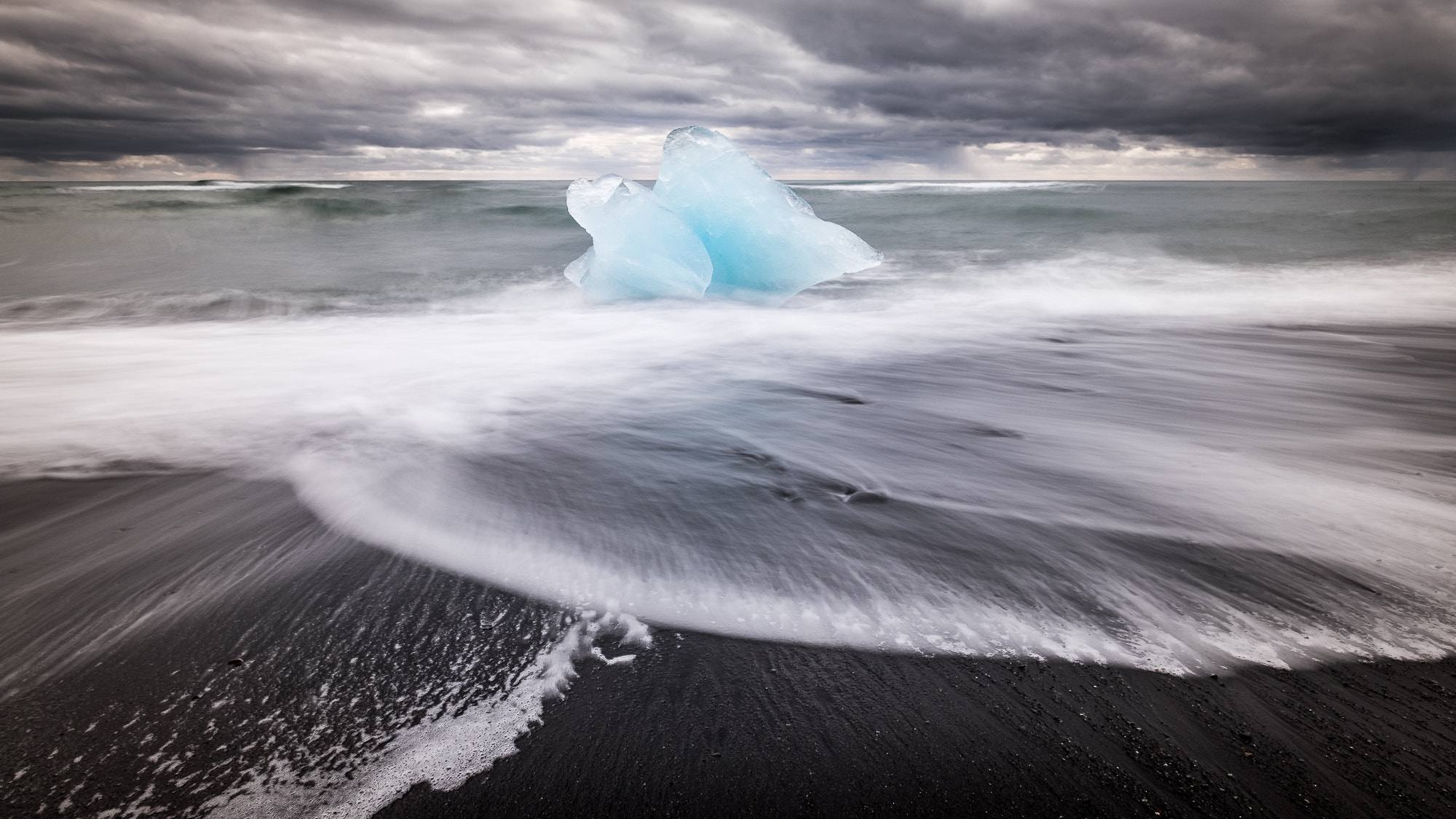
The beach is black volcanic sand. The “diamonds” are fragments of glacier ice carried out of Jökulsárlón and washed ashore. Some visits bring blue blocks and clear shards; on another day the same shore can hold very little ice.
Updated
The short answer
Visit the lagoon and beach together, but keep the beach stop flexible. Conditions decide what is on the sand, and no tour can promise a particular display.
Where Diamond Beach actually is
Diamond Beach is the visitor name for Fellsfjara beside the outlet of Jökulsárlón. The lagoon is on the inland side of Route 1 and the beach is on the ocean side. It is a shore stop, not a separate town or an attraction inside Höfn.
Ice calves from Breiðamerkurjökull into the lagoon, then pieces travel through the river towards the Atlantic. That moving connection explains the changing scene: the ice you saw in an old photograph is long gone, and a return visit can look entirely different.
Park once within the correct service area
The national park manages the lagoon and beach parking area. Its tariff checked on 20 October 2026 is ISK 1,110 for a passenger car with up to five seats. Larger vehicles have different fees. Follow the signs and use the correct plate number when paying.
The fee lasts until midnight that calendar date, with re-entry allowed. It is not a rolling 24-hour ticket. Skaftafell is a separate park service area; the park advertises a 50% reduction for a second fee area visited on the same date after payment at the first.
Walk below the road bridge
The park explicitly asks pedestrians not to walk over the bridge. Follow the signed connection underneath it between the lagoon and the beach. If construction or conditions change access, current signs take precedence over a map saved earlier.
The park’s B2 Eystri-Fellsfjara walk is listed as an easy 1 km route taking around 40 minutes. Treat that as a named walking route, rather than a guarantee that every person can cover every sandy section in the same time. Sand and winter ice can make footing more demanding.
Choose a photograph, not a tide promise
Low light can bring out the ice’s shape, but arriving safely matters more than chasing a sunrise against a tight itinerary. Give yourself space to look along the shore rather than expecting the first path from the car park to contain the best scene.
An iceberg can move or roll and surf can reach farther up the beach than the previous wave. Keep camera bags and tripod positions well away from the water. Never climb on a block of ice, even when it appears firmly beached. Supervise children throughout the visit.
Fit it around your lagoon booking
A boat departure is timed; a beach visit is flexible. For a day based in Höfn, protect your boat check-in first and walk the beach afterwards if weather allows. A suggested short stop is planning advice, not a reason to rush close to waves.
Bring windproof layers, waterproof shoes and lens protection. Facilities are concentrated around the lagoon and some services are seasonal. Check the national park’s alerts, the Icelandic Met Office and the live road map before travelling.
Sources & last checked
Checked 20 October 2026. Prices, access and transport can change; confirm with the linked official source before travelling.
Plan your trip
Compare tours
Check current dates, inclusions and availability on GetYourGuide.
We earn a commission on bookings through these links. How this works.